


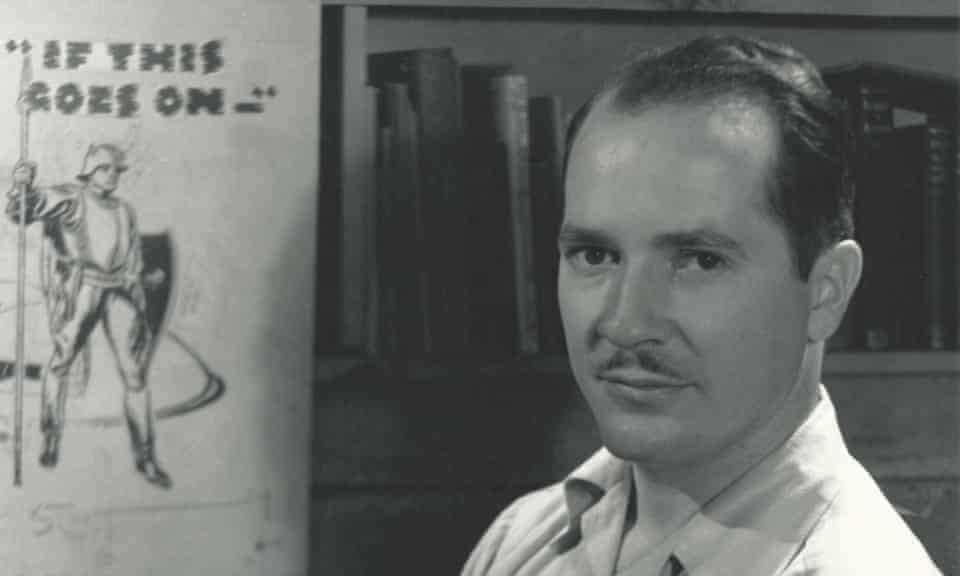

Robert Anson Heinlein (1907–1988) was much more than a science fiction writer: he was a provocative thinker, a naval engineer, and a visionary who helped define the genre in the 20th century. Born in Missouri, he attended the United States Naval Academy and served as an officer until illness forced his retirement. From then on, he devoted himself to writing, debuting in pulp magazines such as Astounding Science Fiction.
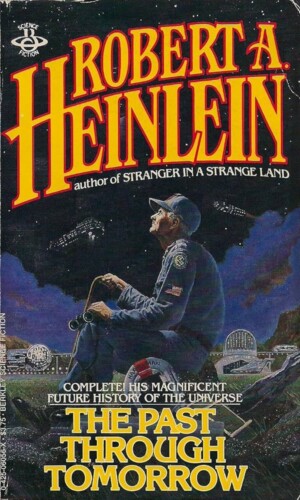
Heinlein He was a pioneer in introducing adult, political, and philosophical themes into science fiction, distancing it from juvenile clichés and bringing it closer to serious literature. His style is characterized by:
- Complex narratives with non-linear structures
- Autonomous characters and provocateurs
- Exploration of themes such as militarism, sex, religion, and individual freedom
- Technical language and scientific realism, the result of his training in engineering
It was part of the so-called “Big Three" next to Isaac Asimov and Arthur C. Clarke, but his more polemical and philosophical approach clearly distinguishes him. Heinlein He not only wrote novels: he also influenced the American libertarian political thought and in the pop culture, anticipating debates that still resonate today.
Two Iconic Works by Robert A. Heinlein That You Should Read If You Love Science Fiction
Stranger in a Strange Land (1961)
This novel tells the story of Valentine Michael Smith, a human raised by Martians who returns to Earth with a completely alien view of society. Heinlein explores themes such as:
- Religion as a social construction
- Free sexuality and group love
- Language as a form of thought
- The alienation of the individual in modern culture
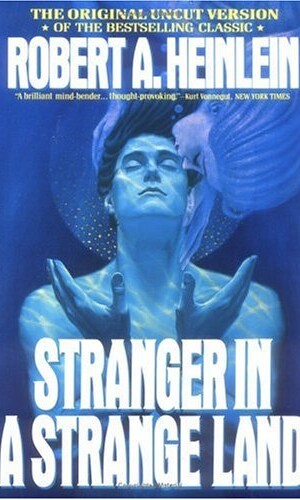
The work became a countercultural symbol in the 1960s, especially among the hippie and libertarian movements. Its phrase "share water" became a mantra of spiritual communion.
Space Troopers – Starship Troopers (1959)
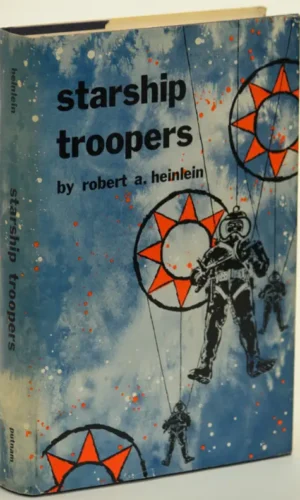
Set in a militarized future, it follows Juan "Johnny" Rico as he trains as a mobile infantryman in an interplanetary war against the "arachnids." Although at first glance it seems like a war novel, Heinlein uses it to reflect on:
– Citizenship and civic duty
- The military discipline as a virtue
- The democracy against authoritarianism
- He individual sacrifice for the common good
Starship Troopers and the Controversy
This work has been the subject of intense debate. Many have accused it of:
– Apology for militarism: Heinlein presents a system where only veterans have the right to vote.
– Fascist sympathies: The social structure and language are reminiscent of totalitarian regimes.
– Glorification of war: Although there are philosophical reflections, the war action dominates the narrative.
However, others argue that Heinlein does not propose an ideal model, but rather raises uncomfortable questions about civic responsibility and the role of the State. The film adaptation of Paul Verhoeven (1997) radicalized this reading, turning it into an explicit satire of fascism, which revived the debate about the author's original intentions.
His ability to anticipate scientific and social advances is one of the reasons why his work remains so influential.
Heinlein as technological prophet:
Exoskeletons and Mechas 🤖
In Starship Troopers, Heinlein describes mobile infantry soldiers equipped with powered suits either combat exoskeletonsThese suits grant them superhuman strength, jumping ability, integrated weaponry, and advanced protection. At the time, this idea was pure science fiction, but today it is considered a technological prophecy.
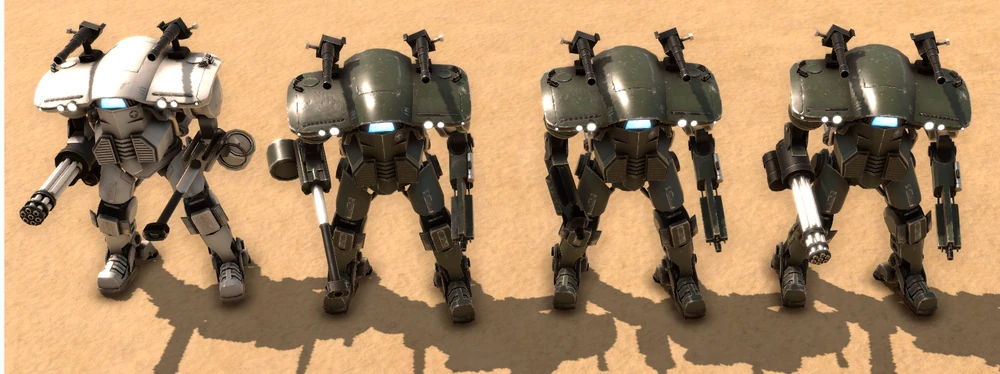
Inventions he anticipated:
– Military exoskeletons: Today, companies like Sarcos Robotics and US Army projects are developing suits that enhance soldiers' strength and endurance, very similar to those Heinlein envisioned.
– Human-machine interfaces: The idea that the suit responds directly to the user's movements and thoughts anticipates current technologies such as neural control systems.
– Individual mechanized combat: The concept of a single soldier with destructive power equivalent to a platoon is an idea that has influenced the design of drones, autonomous robots and portable weapons.
🇯🇵 Influence on Japanese Manga and Anime
Heinlein's vision didn't stay in the West. His concept of mechanized soldiers profoundly influenced the development of the genre. Wick in Japan, which flourished in the 70s and 80s with anime series such as:
| 🎬 Mecha Series | 📅 Year | 🚀 Heinleinian influence |
|---|---|---|
| Mazinger Z | 1972 | Human pilot controls giant robot, similar idea to powered suit |
| Mobile Suit Gundam | 1979 | Soldiers in mech suits fight in interplanetary wars |
| Robotech | 1985 | Mechas as an extension of the human body in combat |
| Neon Genesis Evangelion | 1995 | Neurally connected biological mechs, evolution of the smart suit |
Although Japanese creators do not always directly quote Heinlein, his influence is evident in the philosophy of mechanized combat, he designing suits as extensions of the body, and the exploration of the relationship between technology and humanity.
🧠 Beyond Metal: The Conceptual Legacy
The most impressive thing is that Heinlein He not only imagined machines, but raised ethical questions about its use:
- Who deserves to wield that power?
- What does it mean to be human when technology amplifies our capabilities?
- Is war more just if it is fought with machines?
These questions resonate in works such as Evangelion, where the pilot suffers emotionally from his connection to the mecha, or Gundam, which explores the human cost of technological warfare.
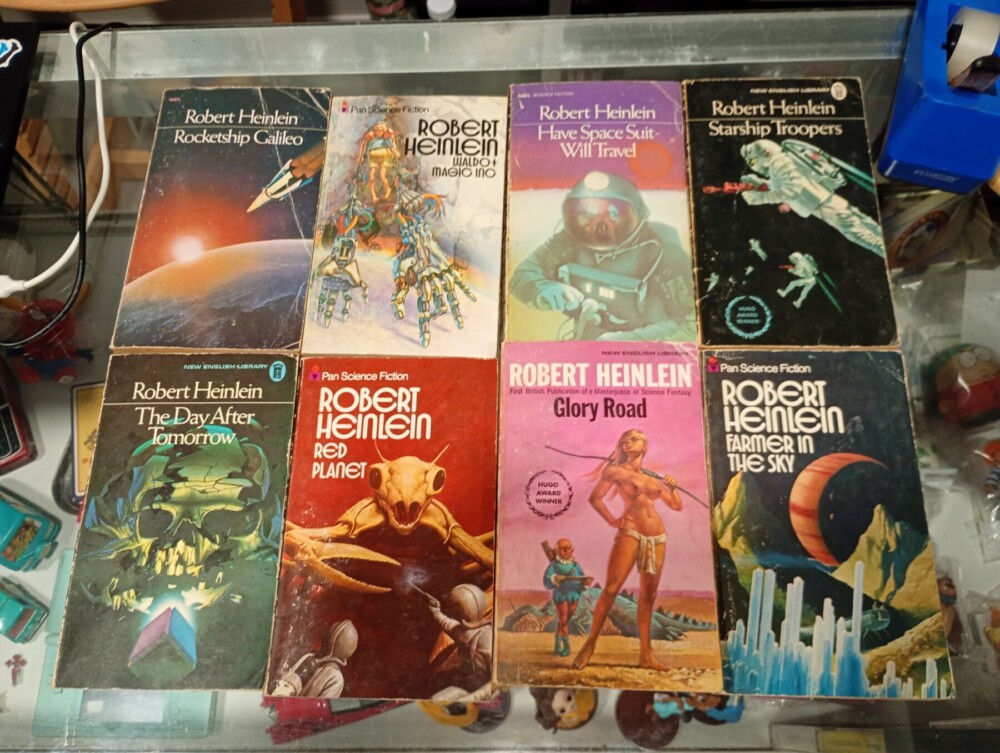
Get your used fantasy and science fiction books
Get your hands on works by Heinlein, Dick, Asimov, Ursula K. Leguin, and others at Wham Vintage Store Barcelona: a second-hand and collectible bookstore specializing in horror and fantasy.